


CALL US NOW!
+65 9009 7510
CALL US NOW!
+65 9009 7510
Why Hiring a Swimming Pool Specialist Singapore Saves Time and Money
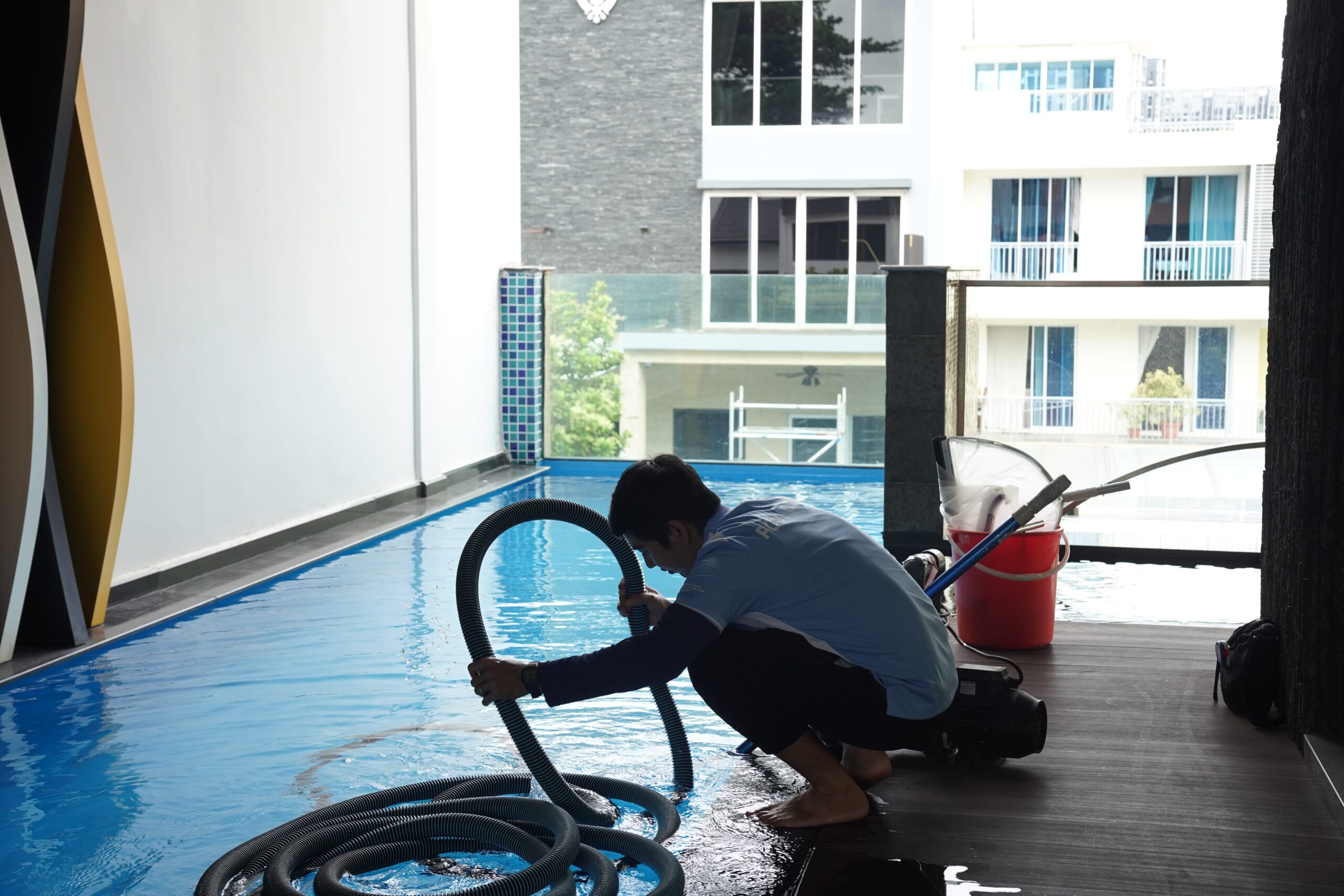
The Hidden Cost of the ‘Green Pool’ Gamble
That murky, algae-clouded water isn’t just an eyesore it’s a financial warning sign. For Singapore homeowners, a neglected pool can spiral from a missed treatment into hundreds of dollars’ worth of remediation costs within days. The decision to go it alone or engage a Swimming Pool Specialist Singapore residents rely on is, at its core, a question of risk management.
Singapore’s equatorial climate is unforgiving. With average temperatures hovering around 31°C and humidity consistently above 80%, pool chemistry can destabilise dramatically within 24 to 48 hours of a missed maintenance cycle. Skip a single week, and you’re not just battling surface algae you’re potentially facing bacterial contamination, stained surfaces, and damaged filtration equipment.
The psychological cost compounds this. A pool you cannot safely use isn’t an amenity; it’s a liability sitting in your garden. The social embarrassment of cancelling a gathering, or the frustration of watching children unable to swim on a sweltering afternoon, carries a very real, if unquantifiable, toll.
Professional pool care reframes the entire equation from reactive damage control to a proactive financial hedge. Before concluding whether DIY saves money, it’s worth examining what the actual numbers reveal about monthly costs on both sides.
The Math of Maintenance: DIY vs. Professional Specialists
When you strip away the assumptions, swimming pool maintenance Singapore homeowners rely on comes down to a straightforward financial question: are you actually saving money by doing it yourself, or are you quietly accumulating costs you haven’t accounted for?
What Professional Servicing Actually Costs
A qualified pool specialist typically charges between SGD 200 and SGD 600 per month, depending on pool size, visit frequency, and service scope. At first glance, that feels like a significant outlay. In reality, it covers labour, expertise, diagnostic equipment, and — critically — the accountability of a trained professional who spots problems before they become expensive repairs. Spread across a four-week month, even the upper end of that range works out to roughly SGD 20 per day for a fully maintained, compliant pool.
The True Cost of Going It Alone
DIY pool care carries a deceptively long shopping list. Consider what’s required just to get started:
- Testing kits and reagents — replenished monthly as chemicals deplete
- Chlorine, pH balancers, algaecides, and stabilisers — purchased at retail rather than trade prices
- Skimmers, brushes, vacuum heads, and hoses — all subject to wear and eventual replacement
- Storage solutions for hazardous chemicals, which carry safety obligations in a residential setting
As this comparison between DIY and professional pool care highlights, these cumulative costs can quietly approach or exceed the professional fee, particularly once equipment depreciation is factored in.
The Time Cost That’s Easy to Ignore
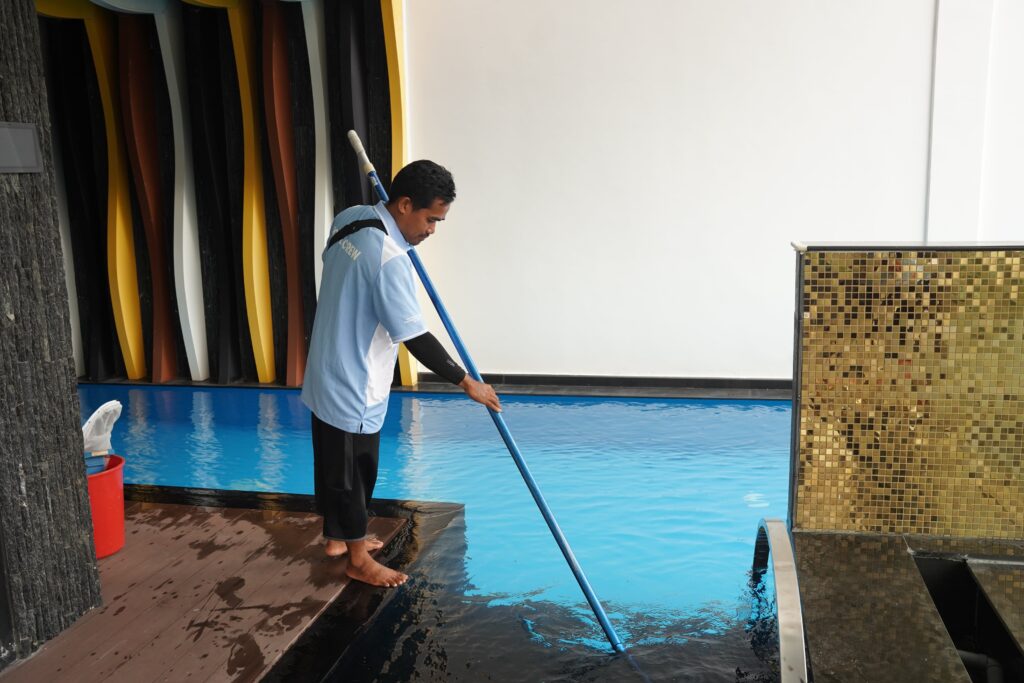
For Singapore professionals already managing demanding careers, the time dimension matters enormously. Proper pool maintenance isn’t a 15-minute weekend task. Thorough testing, backwashing filters, adjusting chemical balances, and brushing walls can consume two or more hours per week. Time spent on pool upkeep is time diverted from higher-value professional or personal priorities a straightforward opportunity cost that the DIY calculation rarely includes honestly.
The Early Detection Gap
Perhaps the most financially significant disadvantage of DIY care isn’t the visible costs it’s what goes unnoticed. An untrained eye won’t identify a pump cavitating under stress, a filter operating below efficiency, or early-stage plumbing corrosion. That detection gap is precisely where the real long-term savings from professional servicing are found, which leads directly to the mechanical risks worth examining next.
Preventing the $1,500 Pump Failure: The Technical Edge
So we’ve established that the cost difference between DIY and professional care is narrower than most homeowners expect. But the real financial argument goes deeper than monthly spend — it lives inside your equipment room.
What a Pool Service Engineer Actually Does
Why hire a pool specialist in Singapore? The honest answer is that the visible work skimming debris, topping up chlorine represents only a fraction of the value delivered. A qualified pool service engineer is simultaneously running a diagnostic on your entire mechanical system. During each visit, they’re assessing pump pressure readings, checking impeller wear, inspecting O-ring integrity, and evaluating filter media saturation indicators that mean little to the untrained eye but signal expensive failures weeks in advance.
In practice, catching a failing pump seal early costs a fraction of what a full pump replacement demands. A new commercial-grade pump for a Singapore residential pool can run well into the thousands of dollars once parts and labour are factored in.
Tropical Humidity: The Silent Accelerant
Singapore’s climate is genuinely punishing on pool mechanics. Year-round humidity above 80%, combined with intense UV exposure and frequent heavy rainfall, accelerates the degradation of rubber seals, motor windings, and electrical components at a rate that pool equipment designed for temperate climates simply wasn’t built to withstand. What might be a five-year component lifespan elsewhere can compress to two or three years in this environment.
Consistent professional oversight is the difference between replacing a worn seal and replacing an entire pump motor.
System Optimisation vs. Surface Maintenance
There’s a meaningful distinction between keeping a pool looking clean and keeping a pool running efficiently. Surface maintenance addresses what’s visible. System optimisation addresses flow rates, filter cycles, and energy consumption — factors that directly affect your utility bills and equipment longevity.
Understanding this distinction sets the stage for examining the specific rules that govern safe, well-maintained pools in Singapore’s unique environment.
The 5 Non-Negotiable Rules of Singapore Pool Safety
Understanding pump failures and maintenance costs is only part of the picture. Singapore’s climate and regulatory environment create specific safety obligations that every pool owner must meet and where cutting corners carries real consequences.
1. Water Chemistry Balance
Singapore’s high humidity and average temperatures above 30°C accelerate chemical consumption dramatically. pH and alkalinity drift faster here than in temperate climates, meaning readings that were correct on Monday can be dangerously off by Thursday. Imbalanced water doesn’t just irritate swimmers’ eyes — it corrodes equipment and erodes tile grout.
2. Hygiene After Heavy Rainfall
A single tropical downpour can dilute sanitiser levels significantly, effectively resetting your water balance. Chlorine levels spikes after heavy rain, and failing to compensate quickly creates conditions where bacteria multiply rapidly.
3. Safety Equipment Compliance
Pool drains, fencing, and gate latches must meet local standards. Non-compliant equipment isn’t merely an inconvenience it creates direct liability for homeowners should an incident occur.
4. Debris and Filtration
Singapore’s lush vegetation means heavy leaf and organic matter loading on filters year-round. Blocked filtration accelerates algae growth and puts strain on pumps.
5. Professional Oversight and Liability
Professional oversight is crucial for liability it’s arguably the most underappreciated safety rule of all. Working with the best swimming pool specialist Singapore has to offer means documented service records that demonstrate due diligence if questions ever arise.
These compliance requirements, however, are only one dimension of why specialist knowledge outperforms a generalist approach as the next section explores in detail.
Why a Specialist is Better Than a General Contractor
Having covered Singapore’s specific safety regulations and climate-driven maintenance demands, it’s worth asking a more pointed question: does it matter who does the work, as long as it gets done? In practice, the answer is a clear yes and the difference between a qualified pool specialist and a general contractor often shows up in costly, preventable ways.
professional pool services Singapore homeowners rely on aren’t interchangeable with general building maintenance. Pool work in Singapore sits within a regulated environment where licensing and work permits are non-negotiable. Engaging an unlicensed contractor for structural or electrical pool work can expose homeowners to liability and invalidate insurance claims — a risk no pool owner should be willing to take.
Beyond compliance, the technical gap is significant in two key areas.
Precision Chemical Dosing
Over-chlorination is one of the most common and underappreciated mistakes in pool care. Excessive chlorine doesn’t just irritate swimmers’ eyes and skin — it degrades pool fittings, bleaches liners, and corrodes metal components far faster than normal wear. A trained specialist uses calibrated testing equipment and understands how Singapore’s humidity and heat accelerate chemical consumption, adjusting dosing schedules accordingly rather than applying a one-size-fits-all formula.
Early Leak Detection
A slow, undetected leak doesn’t just waste water it can silently erode the soil beneath your pool’s foundation, leading to structural damage that costs far more than any maintenance contract.
General contractors rarely carry the specialist diagnostic equipment needed to distinguish normal evaporation from a genuine leak. Pool specialists use pressure testing and dye methods to pinpoint problems early, before minor seepage becomes a structural concern.
Choosing the right professional protects far more than your water chemistry — it protects the entire asset, which is exactly what we’ll explore in the conclusion.
Key Takeaways
- Testing kits and reagents — replenished monthly as chemicals deplete
- Chlorine, pH balancers, algaecides, and stabilisers — purchased at retail rather than trade prices
- Skimmers, brushes, vacuum heads, and hoses — all subject to wear and eventual replacement
- Storage solutions for hazardous chemicals, which carry safety obligations in a residential setting
- Swimming Pool Specialist Singapore
Conclusion: Protecting Your Asset and Your Time
The case against DIY pool care isn’t simply about cost it’s about cumulative risk. Throughout this article, a consistent pattern has emerged: what appears to be a saving in the short term frequently becomes a significant liability over time. Reactive repairs, premature equipment replacement, and regulatory non-compliance can collectively push costs far beyond what years of professional servicing would have amounted to.
The benefits of professional pool maintenance extend well beyond chemical balance and clean water. They encompass equipment longevity, structural integrity, regulatory peace of mind, and perhaps most valuably your time. A pool that’s consistently managed by a specialist is simply ready to swim in, without the weekend troubleshooting, the emergency call-outs, or the creeping anxiety about what might be developing beneath the surface.
A professionally maintained pool is not an expense it’s the cheapest form of pool ownership available to you.
Consider the straightforward comparison: routine specialist care versus a partial or full pool reconstruction, which can run into tens of thousands of dollars in equivalent costs. The numbers favour professional investment decisively.
The next step is clear. Book a professional pool assessment to understand exactly where your current setup stands and what it will cost you if left unattended.
