


CALL US NOW!
+65 9009 7510
CALL US NOW!
+65 9009 7510
Why Regular Swimming Pool Maintenance Singapore Prevents Costly Repairs
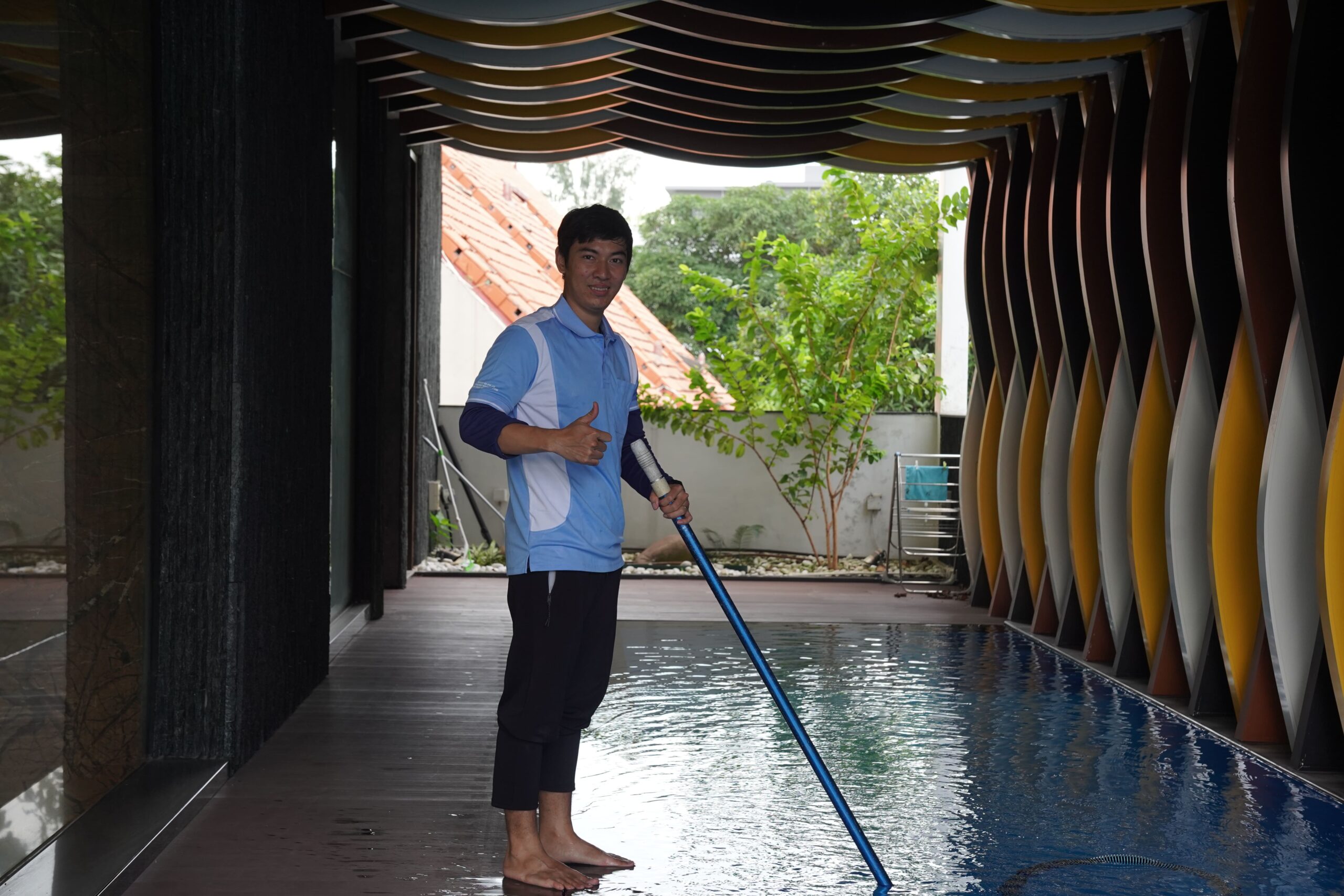
The Tropical Pool Paradox: Why Singapore Pools Age Faster
Singapore is one of the most demanding environments on the planet for a swimming pool. Temperatures hovering between 28–34°C year-round, combined with relentless humidity, create conditions that aggressively accelerate pool deterioration and most owners simply don’t see the damage until it becomes expensive.
That heat isn’t just uncomfortable; it’s a literal petri dish for algae and bacteria. Warm water dramatically speeds up microbial growth, meaning a pool left untreated for even a few days can shift from crystal clear to visibly green. High humidity compounds the problem by affecting how quickly pool chemicals evaporate and become unbalanced, forcing chemical equilibrium to fluctuate far more than it would in cooler climates.
Unlike pools in the UK or Europe that sit idle through winter, Singapore pools run continuously 365 days a year. This accelerated wear puts enormous strain on pumps, filters, and circulation systems that were often engineered with seasonal downtime in mind.
It’s also worth drawing a clear distinction: cleaning addresses how your pool looks, whilst maintenance addresses how it functions structurally and mechanically. Effective swimming pool maintenance Singapore covers both and neglecting either has a financial cost that compounds quickly.
The Financial Reality: SGD 200 Now vs. SGD 2,500 Later
Understanding the true cost of pool ownership in Singapore starts with a simple comparison. Regular pool maintenance Singapore contracts typically run between SGD 150–300 per month, depending on pool size and service frequency. That figure covers professional chemical balancing, physical cleaning, and basic mechanical checks. Spread across a year, you’re looking at roughly SGD 1,800–3,600 a manageable, predictable expense.
Now consider the alternative.
When Small Problems Become Expensive Emergencies
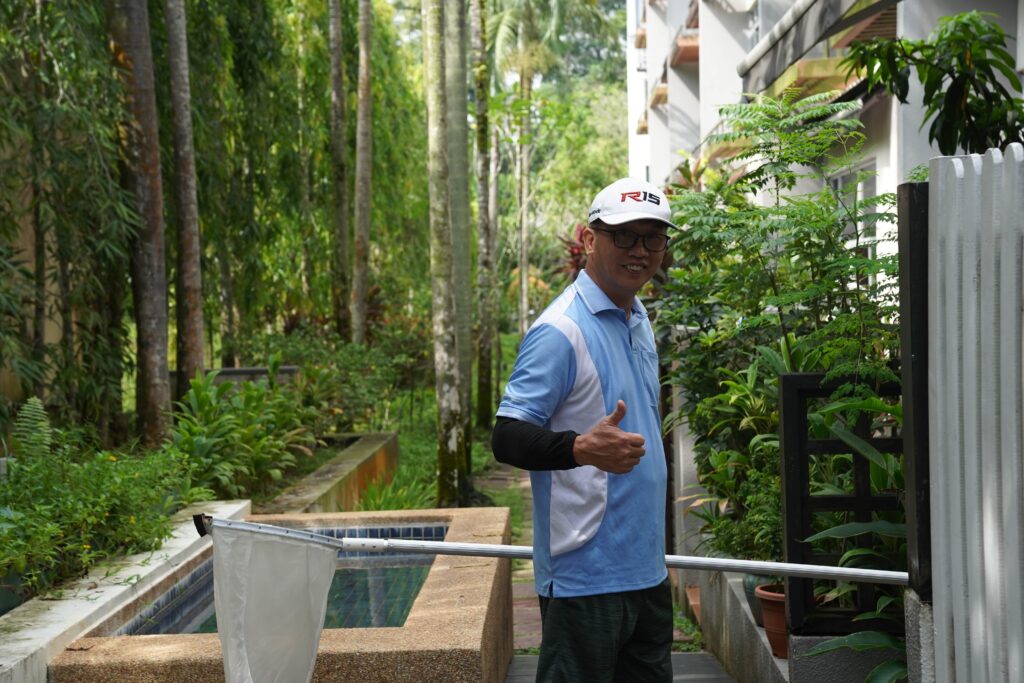
A single failed pool pump in Singapore can cost SGD 800–1,500 to replace. A cracked filtration system or a corroded control panel can push repair bills well past SGD 2,500. Full pool resurfacing often the consequence of prolonged chemical imbalance can run into five figures. As this guide on pool maintenance explains, skipping routine cleaning is rarely a neutral decision; it’s a slow accumulation of risk.
The Compounding Effect of Neglect
What makes pool neglect particularly costly is how problems chain together. A minor leak, left unaddressed, places additional strain on your circulation pump, which must work harder to maintain water pressure. That sustained overexertion generates excess heat, degrading motor bearings over time eventually causing complete burnout. One small drip becomes a SGD 1,200 pump replacement.
Neglect doesn’t just create individual problems; it creates cascading ones.
The Hidden Cost of ‘Shock’ Treatments
When a pool is allowed to deteriorate algae blooming, pH spiralling out of control — standard maintenance simply isn’t enough to restore it. Professionals must perform shock treatments: high-dose chemical interventions that can cost SGD 300–600 per session. Depending on how far the water quality has fallen, multiple sessions may be required before the pool is safe again.
The maths, frankly, isn’t close. Understanding precisely what goes into a proper maintenance routine helps explain why those monthly fees represent such genuine value — which is exactly what we’ll examine next.
What Professional Swimming Pool Maintenance in Singapore Actually Includes
Many pool owners assume maintenance is simply a matter of topping up chlorine and skimming the surface. In practice, professional servicing is considerably more comprehensive and understanding what it covers explains precisely why regular pool maintenance prevents costly repairs Singapore homeowners would otherwise face down the line.
Chemical Balancing: The Full Picture
Chlorine is only one piece of the puzzle. A thorough chemical check covers pH levels (ideally between 7.2 and 7.6), total alkalinity (which buffers against sudden pH swings), calcium hardness, and cyanuric acid the stabiliser that protects chlorine from being rapidly destroyed by Singapore’s intense UV radiation. When any one of these falls out of balance, the knock-on effects can damage surfaces, irritate swimmers’ eyes, and accelerate equipment corrosion.
Mechanical Inspection: Protecting the Pool’s Engine Room
Pumps, timers, and filter systems form the operational heart of any pool. Professional technicians check for unusual vibrations, leaks around fittings, and whether timers are running filtration cycles long enough to turn the full water volume over properly. Catching a worn pump seal early costs a fraction of replacing a seized motor entirely.
Physical Cleaning: More Than It Appears
Skimming and vacuuming remove organic matter before it decomposes and depletes sanitiser levels. Leaves, insects, and airborne debris break down quickly in Singapore’s heat, creating the conditions that allow algae and bacteria to establish rapidly.
Backwashing: The Most Overlooked Step
Backwashing — reversing water flow through the filter to flush trapped debris is routinely skipped by DIY pool owners. Without it, filter media becomes compacted, pressure builds, and circulation efficiency drops sharply. Neglected filters quietly drain energy and compromise water clarity, setting the stage for the more serious filtration problems we’ll explore next.
The Hidden Dangers of Neglecting Your Pool’s Filtration System
Understanding why regular pool maintenance prevents repairs becomes especially clear when you examine what happens beneath the surface specifically, inside the filtration and circulation systems that keep water safe and clean.
Calcification and the Silent Destruction of Equipment
Scale buildup is one of the most underappreciated threats to pool infrastructure. When calcium hardness levels are left unbalanced, mineral deposits accumulate on heating elements, salt chlorinator cells, and pump housings. In practice, a salt system that costs upwards of £1,500–£2,500 to replace can be rendered useless within 12 to 18 months purely through calcium fouling. Weekly servicing catches these imbalances early, when a simple chemical adjustment costs almost nothing.
The Electricity Bill You’re Not Watching
Clogged or partially blocked filters force circulation pumps to work significantly harder to move the same volume of water. A struggling pump can consume 20–30% more electricity than one operating with clean filtration media a cost that accumulates invisibly on every monthly utilities bill. This is one of the quieter financial penalties of neglect, easy to miss precisely because it never appears as a single large charge.
Micro-Leaks, Pool Decks, and Liner Longevity
Weekly inspections also serve a structural purpose. Small fissures around fittings and returns so-called micro-leaks allow water to seep beneath the pool deck, gradually eroding the substrate and causing cracking or subsidence. Caught early, sealing a micro-leak is straightforward. Left unattended, the remedial work can be extensive.
Proper pH management is equally critical for protecting pool tiles and liners. Persistently acidic water etches grout and corrodes tile adhesive, while highly alkaline water accelerates scaling on surfaces. Both extremes dramatically shorten the lifespan of finishes that are costly to restore.
Protecting your pool’s infrastructure is, of course, only part of the picture. There are also formal regulatory obligations particularly for communal pools — that make professional, documented maintenance not just sensible, but legally necessary.
Regulatory Compliance: NEA Standards and the Risk of Forced Closure
Beyond the mechanical consequences of neglect explored in previous sections, there’s a legal dimension that many Management Corporation Strata Title (MCST) bodies and private pool owners seriously underestimate. In Singapore, the National Environment Agency (NEA) sets strict water quality standards for communal pools — and the consequences of non-compliance extend well beyond a repair bill.
NEA requirements for communal pools include maintaining free residual chlorine between 1.0 and 3.0 mg/L, a pH level between 7.2 and 7.8, and water clarity that permits the pool floor to be clearly visible. Regular bacterial testing is also mandated to ensure coliform counts remain within safe limits.
Failure to meet these standards during an inspection can result in immediate pool closure orders — a significant disruption for any residential development or commercial facility. For MCSTs, the reputational and financial fallout from a forced closure can be considerable.
The health risks are equally serious. Poorly maintained, stagnant water creates ideal breeding conditions for Aedes mosquitoes, which are vectors for dengue a persistent public health concern across Singapore. Bacterial infections, including those caused by E. coli and Pseudomonas aeruginosa, are also associated with under-treated pool water.
This is precisely why professional logging of water quality data isn’t merely good practice — it’s a legal safeguard. Documented records demonstrate due diligence during NEA inspections and protect MCSTs from liability claims should a health incident occur.
Investing in quality swimming pool cleaning services Singapore provides verifiable compliance records that serve as concrete evidence of responsible management — a consideration worth weighing as we look at the broader financial case for prevention over cure.
Conclusion: Making the Shift from Expense to Investment
Regular swimming pool maintenance in Singapore isn’t a luxury it’s the single most effective financial decision a pool owner can make. Throughout this article, one principle has remained constant: prevention is invariably cheaper than cure.
The ‘Singapore Factor’ makes this truth non-negotiable. The combination of intense tropical heat, year-round humidity, and stringent NEA compliance standards creates conditions where neglect accelerates damage far faster than in cooler climates. Add to that the rising cost of specialist labour, replacement equipment, and potential enforcement action, and the financial case for consistent upkeep becomes overwhelming.
Neglecting your pool doesn’t save money it simply delays a much larger bill.
Your Next Step: Audit Your Maintenance Schedule
Take a moment to honestly evaluate your current routine. Ask yourself: How frequently is the filtration system being inspected?, When did you last test chemical balance beyond a basic visual check?, and Is your maintenance provider aligned with NEA water quality standards? If any of these questions prompt hesitation, that’s your signal to act. A straightforward maintenance audit reviewing service frequency, chemical logs, and equipment condition can reveal gaps before they become costly repairs.
The Peace of Mind You’re Actually Paying For
Beyond the financial logic, there’s an equally compelling reason to invest in proper maintenance: simply enjoying your pool without the nagging worry of what might be quietly failing beneath the surface. A well-maintained pool invites use; a neglected one breeds anxiety.
In practice, pool owners who commit to structured, regular maintenance report fewer emergencies, lower annual spend, and a pool that genuinely adds value to their property rather than draining it. That’s the real return on investment.
