


CALL US NOW!
+65 9009 7510
CALL US NOW!
+65 9009 7510
Swimming Pool Installation in Singapore: Complete Guide
Introduction
Choosing a company for swimming pool installation in Singapore is not just about pretty designs. You should check BCA licensing, local project history, itemised quotes, written warranties, and whether the team follows NEA pool hygiene guidelines and handles permits properly. Skip those checks and a nice‑looking pool can still mean leaks, delays, or unsafe water.
Singapore’s humid weather, soft soil, monsoon rain, and strict authority approvals all add risk, so small mistakes quickly become expensive.
This guide covers pool types, installation stages, and realistic cost ranges, then shows how to judge a contractor’s reliability. You will also see why clear online information, project photos, reviews, and service transparency help property owners judge a contractor’s reliability before requesting a quote.
Ready to plan your pool with the right experts from construction to marketing? Use the checklists and benchmarks below as you compare proposals.
Key Takeaways
Before looking at designs or tiles, be clear on what you want from your pool and from your contractor so every quote can be compared on the same terms.
- You can choose between concrete, fiberglass, lap, infinity, and plunge pools, each fitting different spaces and budgets. Understanding the trade‑offs for cost, build time, and best use helps you and your installer avoid designs that fight your property layout.
- The swimming pool installation process runs from design and approvals through excavation, structure, waterproofing, equipment, and handover. Knowing these stages helps you spot weak project management and explains why BCA, URA, and NEA compliance matters for safe operation.
- Pool prices depend on size, depth, structure type, site access, finishes, and extras such as infinity edges or automation. Clear, itemised quotations make it easier to judge value instead of chasing the lowest number, and the same mindset helps when you compare maintenance contracts later on.
- Swimming pool installation firms build trust when strong workmanship is matched with a clear online presence. Project photos, reviews, credentials, service pages, and easy enquiry options help property owners feel more confident before the first site visit.
What Types Of Swimming Pools Can You Install In Singapore?
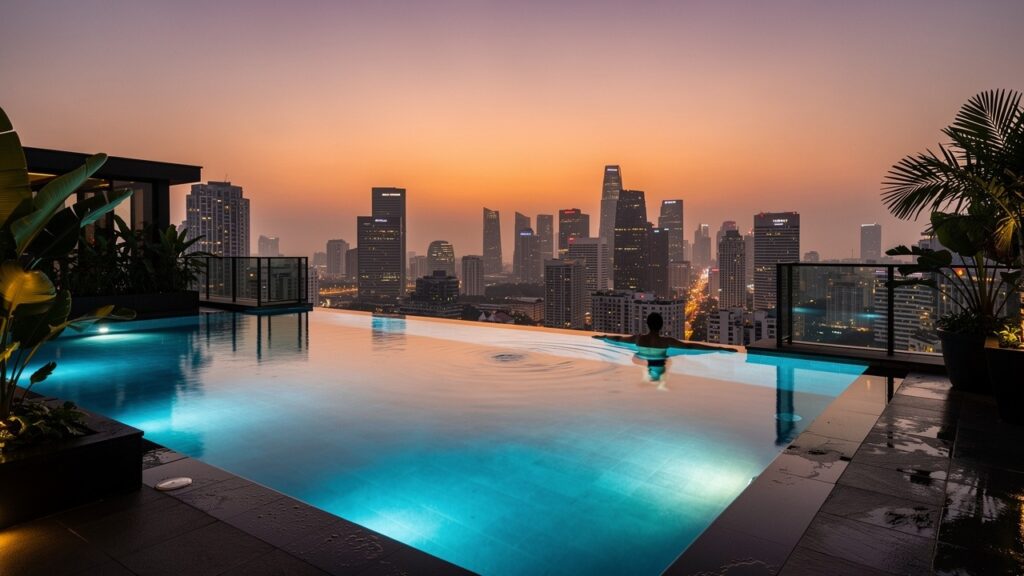
The main types of swimming pools you can install in Singapore are concrete, fiberglass, lap, infinity, and plunge pools. Matching each option to your land size, budget, and lifestyle is one of the first signs that a contractor understands what you need.
Concrete pools remain the default for many landed homes, boutique hotels, and clubs from Bukit Timah to Sentosa. They suit owners who want custom shapes, varying depths, or full mosaic finishes that match a high‑end garden, at the cost of longer build times and more complex structural work.
Fiberglass pools arrive as pre‑formed shells that are lowered into an excavated hole and backfilled. They usually work best for smaller landed plots where speed and simpler care matter more than unusual shapes, and their smooth, non‑porous surface helps reduce algae growth and chemical use, especially with salt chlorination systems.
Lap pools are long and narrow, ideal for regular exercise and for plots where you have length but limited width. You often see them in condominiums and tighter landed sites, running along a boundary wall or side yard, so a good installer will balance length with maintenance access and privacy.
Infinity pools create the familiar vanishing edge, where water appears to spill into the skyline or greenery. In Singapore, these are common in high‑end condominiums and hillside properties with URA‑approved views, but they need careful engineering and strong waterproofing around the catchment trough.
Plunge pools are compact and deep, used more for cooling off than for laps. They fit rooftop terraces, courtyards, or smaller gardens and can start at lower price bands than full‑length lap pools. With internet penetration above 90 percent, many buyers now research these pool types online before they ever call a contractor (DataReportal).
Here is a simple comparison you can use while shortlisting designs with your installer:
| Pool Type | Construction Time (From Site Start) | Cost Range (SGD, Typical) | Best Suited For |
| Concrete | 8–16 weeks | 50,000–150,000+ | Custom shapes, luxury finishes, larger landed homes |
| Fiberglass | 3–6 weeks | 20,000–60,000 | Faster builds, smaller landed plots, simpler designs |
| Lap | 8–16 weeks | 60,000–150,000+ | Exercise use, narrow sites, side yards or along walls |
| Infinity | 12–24+ weeks | 150,000+ | Premium landed homes, condos with strong views |
| Plunge | 6–10 weeks | 20,000–80,000 | Compact spaces, rooftops, courtyards, cooling rather than laps |
How Does The Swimming Pool Installation Process Work?
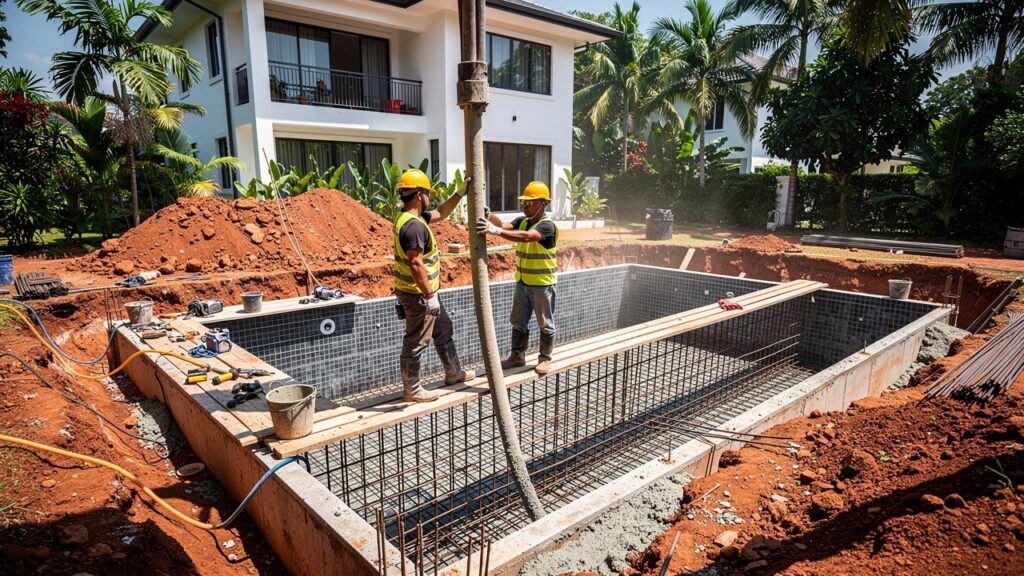
The swimming pool installation process in Singapore follows a planned sequence from early design to final handover. Knowing the main stages helps you see whether a contractor works in a disciplined way or cuts corners that may cost you later.
It starts with design and site study. A good installer will measure your land, discuss how you want to use the pool, and check drainage, existing services, and nearby structures. For more complex projects, a Professional Engineer registered with the Building and Construction Authority (BCA) signs off on structural plans.
Next comes authority approval. For landed homes, your contractor typically submits drawings to BCA and, where relevant, the Urban Redevelopment Authority (URA) for planning compliance. Experienced firms understand common rejection reasons, which matters because extra review rounds can add weeks before excavation even begins.
Once approvals are in place, work moves to excavation and structural works. In areas with soft marine clay or tight access, excavation can take longer and may need extra shoring. Concrete pools receive steel reinforcement followed by sprayed or poured concrete, while fiberglass pools receive a pre‑made shell that is carefully levelled and backfilled.
Contractors then install plumbing and electrical systems before finishes go on. This covers skimmers, inlets, main drains, pump rooms, LED lighting, and optional smart controls linked to a mobile app. All electrical work should be handled by licensed electricians working within Singapore’s safety codes and NEA guidance on water quality.
After all pipes and cables are pressure‑tested, the team applies waterproofing and finishes. Membranes, tiles, pebble interiors, and surrounding decks in porcelain, stone, or composite wood give the pool its final appearance and must be detailed to drain properly during heavy rain.
The last step is filling, testing, and handover. The contractor balances pH, chlorine, and other chemistry, runs pumps through full cycles, and checks each feature. Many owners then engage a maintenance specialist such as KCN Pool Services Pte Ltd, a Singapore‑based BCA‑registered ME11 (Mechanical Engineering, L1) contractor focused on pool maintenance, cleaning, repair, and restoration, so water stays safe and NEA‑aware after the builders leave.
How Long Does Pool Installation Take In Singapore?
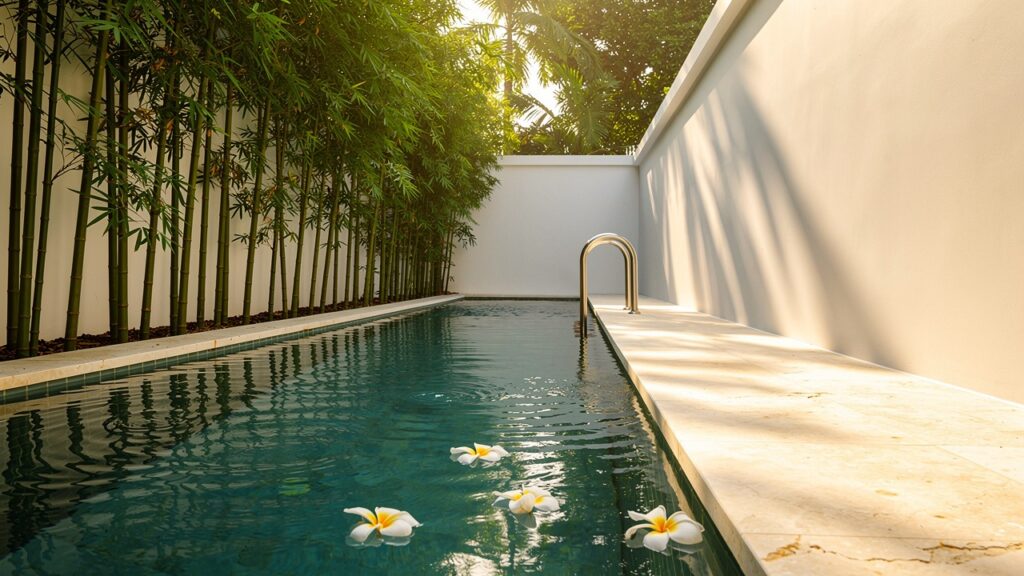
Pool installation timelines in Singapore depend on pool type, design complexity, and site conditions. The figures below refer to typical construction time after all approvals are in place:
| Pool Type | Typical Construction Timeline |
| Standard fiberglass pool | 3–6 weeks |
| Small concrete plunge pool | 6–10 weeks |
| Standard residential concrete | 10–16 weeks |
| Large or complex infinity design | 16–24+ weeks |
Regulatory approvals from BCA and URA sit outside these ranges and may add several weeks or more. Monsoon periods can also slow excavation and concrete work, so factor seasonal weather into your expectations.
What Does Swimming Pool Installation Cost In Singapore?
Swimming pool installation cost in Singapore usually starts around SGD 20,000 for a basic fiberglass plunge pool and can exceed SGD 150,000 for high‑end infinity designs. The final price is driven by structure type, pool size, finishes, and site conditions, not just the visible water surface.
Size and depth sit at the heart of your budget. Longer, deeper pools need more excavation, concrete, steel, and tiles, which raises both material and labour costs. Unusual shapes, curves, or integrated spas also add to the structural load that your Professional Engineer has to allow for.
Site conditions matter more than many owners expect. A backyard in relatively flat Serangoon with easy truck access and firm soil is usually cheaper to build in than a steep, tight site in Bukit Timah. Limited access can force smaller machinery or even manual excavation, and poor ground may call for extra concrete or piling.
Equipment choices also change both upfront and long‑term costs. Higher‑efficiency variable‑speed pumps from brands such as Pentair or Hayward cost more at purchase but can reduce electricity bills over time. Research from WordStream suggests that better targeting can lower wasted spend in advertising by more than 30 percent, and the same mindset applies when you specify pool equipment and features (WordStream).
Here are typical cost bands many Singapore owners see when they gather quotes from reputable contractors:
| Pool Type / Scope | Indicative Cost Range (SGD) |
| Basic fiberglass plunge or compact pool | 20,000–30,000 |
| Standard concrete lap or family pool | 50,000–100,000 |
| Premium concrete with full tiling, spa, smart controls | 100,000–200,000+ |
| Custom infinity or rooftop showpiece | 150,000+ |
Ongoing maintenance also needs space in your budget. Residential owners often spend SGD 3,000–8,000 per year on servicing, chemicals, utilities, and periodic equipment changes, especially for larger pools. For condominiums and hotels, NEA testing requirements and heavier usage can push those figures higher; working with a regular service partner such as KCN Pool Services Pte Ltd helps keep water care consistent and documented.
The cheapest pool quote often ends up costing the most once repairs, downtime, and rushed workmanship are added.
When comparing quotations, look for detailed line items that spell out structure, finishes, equipment brands, permit fees, and maintenance training. According to BrightLocal, 98 percent of consumers now use online channels to research local businesses, which makes it easier to check whether a contractor’s pricing matches the quality shown in reviews and past projects (BrightLocal).
Locking It In Your Next Step Toward A Smarter Pool Installation Business
Choosing the right contractor for swimming pool installation starts with clear checks on licensing, experience, cost structure, and safety. Once you understand pool types, construction steps, and realistic budgets, it becomes much easier to read quotations and ask sharper questions.
On the business side, pool installers who present that that professionalism online tend to win more of the right projects. With clear service pages, project galleries, reviews, retargeting, and helpful content, your best work can be seen by the people who value it. After construction, partnering with a specialist such as KCN Pool Services Pte Ltd for scheduled maintenance keeps the water side of each project running smoothly.
If you want your next year of projects to come from steady, qualified enquiries instead of random referrals, this is a good moment to act. For property owners, the next step is to compare written proposals carefully and plan long-term maintenance early so the pool remains safe, clear, and easy to manage after handover.
Frequently Asked Questions
Question: Do I need BCA approval before starting a swimming pool installation in Singapore?
Yes, most structural pool works for landed homes require approval from the Building and Construction Authority and sometimes URA. A properly licensed contractor normally prepares drawings, engages a Professional Engineer where needed, and submits all documents. These review steps can add several weeks before construction starts, so build them into your timeline.
Question: What is the most low‑maintenance pool type for Singapore’s climate?
Fiberglass pools are often the lowest‑maintenance option because their smooth, non‑porous surface resists algae growth, a claim supported by A comprehensive study on microbial contamination and physicochemical properties in swimming pools that highlights how surface type influences bacterial and algal proliferation. When combined with a salt chlorination system, many owners find they handle fewer harsh chemicals and enjoy softer‑feeling water. Regular professional servicing is still important, but daily tasks are usually lighter than with rough concrete finishes.
Question: How do I verify that a pool contractor in Singapore is properly licensed?
You can look up the company on BCA’s online directory and confirm it holds the right construction or mechanical engineering licence class. Ask for the Professional Engineer details used for your project as well. Plumbing and electrical sub‑contractors should have their own valid licences, which you are entitled to see before work begins.
Question: What ongoing costs should I budget for after pool installation in Singapore?
You should plan for monthly professional servicing in the range of about SGD 100–300 for typical residential pools, plus another SGD 50–150 for chemicals and higher electricity use from pumps and heaters. Over a year, many owners spend roughly SGD 3,000–8,000, including equipment repairs and part replacements as the system ages; a specialist like KCN Pool Services Pte Ltd can advise on a service schedule that fits your pool size and usage.
