


CALL US NOW!
+65 9009 7510
CALL US NOW!
+65 9009 7510
Swimming Pool Upkeep: Singapore Owner’s Guide 2026
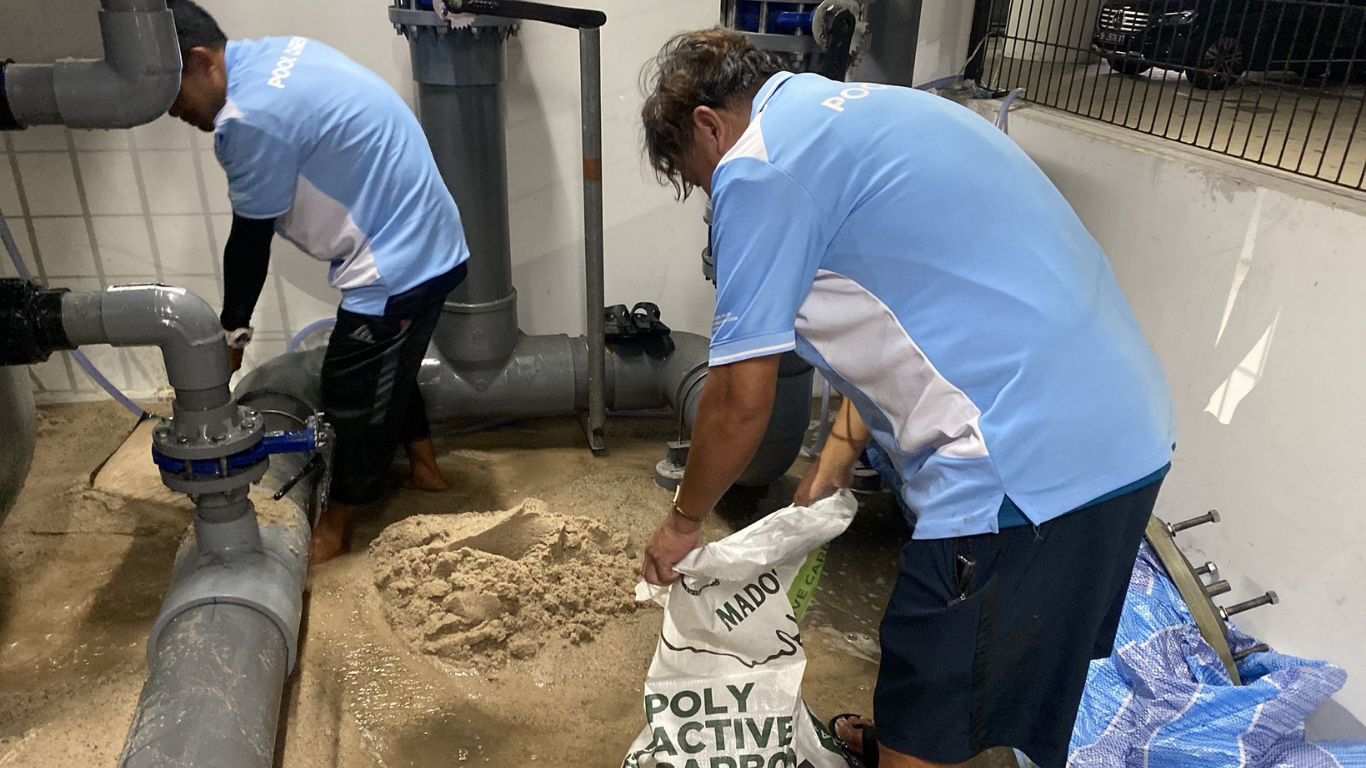
A swimming pool is one of the great luxuries of a Singapore landed home. It is also one of the most demanding features on the property. In this climate, swimming pool upkeep cannot pause for long without visible problems.
When upkeep slips, clear water can turn cloudy or green in just a few days. The pool stops being a place to relax and instead becomes a health risk, a source of equipment trouble, and a possible National Environment Agency (NEA) mosquito breeding concern. Consistent, structured upkeep is not optional for any private or condominium pool.
Swimming pool upkeep means a regular set of cleaning tasks, chemical balancing (pH, chlorine, alkalinity), filtration cleaning, skimmer and basket emptying, tile and grout scrubbing, water top-ups, and equipment checks that keep water safe and systems reliable. This guide gives Singapore owners a complete maintenance checklist with daily, weekly, monthly, and seasonal work, tuned to local weather and NEA rules. It also shows how KCN Pool Services keeps pools in shape with professional, scheduled care.
To see how everything fits together, start with the key points below, then move into the detailed checklist and contractor tips.
Key Takeaways
A few key ideas help frame swimming pool upkeep in Singapore before you look at the full schedule. These points explain why the climate demands more work and how the right routine keeps costs under control.
- Tropical heat and storms: Singapore’s tropical heat, strong sun, and heavy rain place constant stress on pool water. High temperatures speed up chlorine loss and algae growth every single day. Storms dilute chemicals and wash in phosphates, so a pool can change from clear to green far faster than in cooler countries.
- Simple, repeatable schedule: A clear framework of daily, weekly, and monthly tasks gives owners and facilities teams a practical plan. Light daily checks keep water looking clean between service visits. Weekly and monthly tasks handle brushing, testing, and filter care that protect structure and equipment.
- Equipment health equals water health: Healthy equipment is as important as clean water for swimming pool upkeep. A weak pump or clogged filter quickly leads to cloudy water, algae, and higher power use. Regular checks avoid emergency swimming pool pump repair and help each component last longer.
- NEA and dengue control: NEA rules treat stagnant water as a public health risk, not just a cosmetic issue. Poor circulation, blocked gutters, or neglected skimmers invite mosquito breeding and possible enforcement action. Reliable pump operation and routine cleaning help keep your property compliant.
- Professional support when you need it: KCN Pool Services gives Singapore homeowners, developers, and condo managers a dependable maintenance partner. Certified technicians handle chemistry, cleaning, and repairs on a set schedule across the island. That support lets you enjoy the water while professionals handle the detailed upkeep.
Why Singapore’s Tropical Climate Makes Pool Upkeep More Demanding

Singapore’s tropical climate makes swimming pool upkeep more intense than in temperate regions. Constant heat, strong ultraviolet light, and sudden rain all speed up chemical changes and algae growth in residential and condominium pools.
According to Meteorological Service Singapore, daily temperatures usually sit between 26 and 32 degrees Celsius all year. Warm water speeds up reactions, so chlorine and other sanitizers get used up much faster. Strong sun also breaks chlorine apart before it can fully sanitize the water.
Heavy downpours during the Northeast and Southwest monsoon seasons dilute chemicals and push the pH downward. Runoff from gardens can wash soil, fertilizers, and organic matter into the pool. These materials often contain phosphates, which act as food for algae and can trigger a bloom within about 48 hours after a major storm if the pool is not treated.
High humidity and lush landscaping add a steady supply of leaves, flowers, and dust to the water. When this material sits in the pool, it rots, consumes chlorine, and stains surfaces. That is why skimming, brushing, and prompt vacuuming matter so much in Singapore.
There is also a clear public health angle. Dengue is a serious concern, and the World Health Organization estimates 100 to 400 million infections worldwide each year, while the global burden associated with leading pathogens highlights how water-borne and vector-borne diseases remain a critical public health priority. NEA inspectors treat any stagnant water, including neglected pools and overflow gutters, as potential mosquito breeding sites, so reliable circulation is a legal duty as well as a safety measure.
Your Complete Swimming Pool Upkeep Checklist: Daily, Weekly, and Monthly Tasks
This swimming pool upkeep checklist gives Singapore pool owners a clear schedule based on task frequency. By grouping work into daily, weekly, monthly, and quarterly actions, you protect water quality and equipment without guessing what to do next.
The same framework applies to landed homes, cluster houses, and condominium pools, with the main difference being who handles each task. On some properties, in-house staff can manage daily checks while a professional swimming pool contractor in Singapore handles weekly and monthly work.
Below is how to spread the work across the month.
Daily And Weekly Pool Maintenance Tasks

Daily and weekly swimming pool upkeep tasks control most of the visible dirt and basic water balance. These short routines help prevent slimy walls, cloudy water, and stressed pumps or filters.
Daily tasks focus on observation and quick cleaning. Weekly work is more hands-on and covers brushing, testing, and basket care.
- Skim the pool surface each day with a leaf net. Remove leaves, insects, and light debris before they sink. This limits decay that eats up chlorine and feeds algae.
- Check the water level against the skimmer opening or overflow line. Keep it roughly at the midpoint of the skimmer faceplate. Too low lets the pump pull in air, while too high weakens surface skimming. Top up with fresh water after evaporation, splash-out, or backwashing.
- Run the circulation pump for 8 to 12 hours per day in Singapore’s heat. This turns the full pool volume through the filter at least once. Strong circulation also helps avoid dead spots where algae and mosquitoes can thrive.
- Test water at least weekly with a DPD liquid test kit instead of simple strips. Focus on:
- pH between 7.2 and 7.8
- Free chlorine of at least 1 part per million (ppm), often 2–3 ppm for hot, busy pools
- Total alkalinity in the range recommended by your product (commonly 80–120 ppm)
- Adjust chemicals promptly if readings drift. Add chlorine to raise sanitizer levels, pH increaser or reducer to keep pH in range, and alkalinity increaser if needed. Correcting small shifts early is far easier than fixing a green pool later.
- Brush walls, steps, corners, and the waterline at least once a week. Brushing breaks up the thin biofilm that protects algae and bacteria. It also keeps tiles brighter and makes chemicals far more effective.
- Vacuum the pool floor weekly, even if you use a robotic cleaner. Focus on corners, steps, and areas where debris tends to collect. Removing fine dirt reduces strain on both the sanitizer and the filter.
- Empty skimmer baskets and the pump strainer basket every week. Baskets full of leaves and hair choke water flow to the pump. That strain raises energy use and can lead to early pump failure.
- Do a quick visual check for cloudy water, strong chlorine smells, or small algae spots. These are early warning signs that chemistry, circulation, or filtration needs attention.
Monthly And Quarterly Pool Maintenance Tasks
Monthly and quarterly pool maintenance keeps deeper systems in good order. These steps support the long-term health of your finishes, pipes, and equipment.
Monthly work adds extended testing and visual checks to the normal weekly tasks. Quarterly work focuses on filters, seals, and specialty equipment such as salt cells.
- Clean cartridge filters once a month by removing and hosing them down. If you have a sand filter, backwash only when the pressure gauge reads around 8 to 10 PSI above the clean baseline. Cleaning on pressure instead of on a fixed day saves water and keeps filtration steady.
- Walk around the pool and inspect tile grout, underwater lights, and the deck. Look for cracked grout, loose tiles, and gaps around fittings. Early seepage and movement are cheaper to handle than major structural swimming pool repair in Singapore later on.
- Test calcium hardness and cyanuric acid (stabilizer) levels monthly, especially in concrete pools. Aim for about 200 to 400 ppm of calcium and 30 to 50 ppm of stabilizer. This range helps prevent both surface etching and “chlorine lock” where sanitizer becomes less active.
- Perform a shock treatment at least once a month, or after any heavy monsoon storm or crowded pool party. Raise chlorine to a higher level for a short period to break down chloramines and kill stubborn germs. Follow label directions closely for any shock product you use.
- Every quarter, deep-clean cartridge filter elements in a dedicated cleaner to remove body oils, sunscreen, and scale. A simple hose spray cannot remove this oily film. Deep cleaning keeps flow rates strong and extends the life of the cartridges.
- Inspect any saltwater chlorinator cell every three to six months. Look for white or off-white scale on the titanium plates. If you see buildup, use a mild acid wash to clear it before chlorine output drops.
- Check O-rings on pump lids, filter housings, and valves each quarter. Lubricate them with a silicone-based grease and look for cracks. Also confirm timer settings so the pump still runs long enough during the hottest months.
- Schedule a seasonal deep clean at least once a year. After the heaviest monsoon period, plan a more thorough visit that may include detailed tile scrubbing, grout touch-ups, cleaning overflow channels, and a full equipment inspection. This annual reset helps catch hidden issues before they become major repairs.
How To Protect Your Pool Equipment And Avoid Costly Repairs
Protecting pool equipment through routine checks is a key part of swimming pool upkeep. The pump, filter, and chlorinator all rely on each other, so a small fault in one part can quickly affect the whole system.
When baskets clog or seals leak, the pump works harder, runs hotter, and draws more power. Ignored warning signs often end in a full pump replacement instead of a simple seal or capacitor swap. Fast action on early symptoms keeps swimming pool pump repair simple and affordable.
Good equipment habits also lower running costs. A clean, correctly sized system with strong flow keeps water clear with less chemical use and less energy, which matters with electricity tariffs from providers such as SP Group.
Pump, Filter, And Chlorinator Upkeep Essentials

This section outlines practical checks for the pump, filter, and salt chlorinator that any owner or caretaker can watch for. These habits support both water quality and equipment life for pool maintenance in Singapore.
- For the pool pump, check for leaks. Look under the housing for any wet patch. A constant drip or small puddle near the motor usually points to a failed mechanical seal. If you act early, a technician can replace the seal before water damages the bearings or windings.
- Listen carefully to the pump while it runs. A smooth hum is normal, but grinding, screeching, or loud humming often means worn bearings or electrical issues. Call for swimming pool pump repair as soon as you hear new sounds rather than waiting for the motor to seize.
- Have the impeller checked and cleared at regular intervals, especially on leafy sites. Fine debris, seeds, and hair sometimes slip past baskets and lodge in the impeller. Clearing that blockage restores full flow and lowers strain on the entire system.
- Consider upgrading to a variable speed pump when the current unit nears the end of its life. According to Energy Star, certified variable speed pool pumps can use up to 70 percent less energy than standard models. In Singapore, that difference often pays back the upgrade cost in well under two years.
- Replace sand filter media every five to seven years. Over time, grains round off, channels form, and the filter lets fine particles pass straight through. Fresh media restores clarity and can make the pool look newly polished.
- Replace cartridge filter elements every two to three years on average, depending on bather load and cleaning habits. When cartridges stay dirty even after washing or show torn pleats, it is time to replace them. New elements improve clarity and reduce pressure on the pump.
- For saltwater pools, watch the chlorinator cell for white scale on the plates and error codes on the control box. Calcium deposits act like insulation and block chlorine production. A controlled acid wash every three to six months, for just a few minutes, clears the plates without stripping their metal coating.
How KCN Pool Services Keeps Singapore Pools Clean, Safe, And Compliant

KCN Pool Services acts as a long-term partner for swimming pool upkeep across Singapore. The team focuses on doing work properly, on time, so owners, councils, and developers do not have to chase their contractor.
Many low-cost operators skim leaves, toss in some chlorine, and leave within minutes. They often skip full testing, equipment checks, and NEA-related points, which leads straight to algae, cloudy water, and surprise breakdowns. KCN Pool Services takes the opposite approach by using accurate diagnostics, robotic vacuums, and consistent schedules.
KCN Pool Services is BizSafe Level 3 and BCA L1 certified, so work meets Singapore safety and construction standards. As a leading swimming pool specialist Singapore homeowners and managers trust, KCN Pool Services provides professional pool maintenance, cleaning, and repair for condominiums and homes across Singapore. Our certified technicians ensure your pool stays safe, clean, and perfectly balanced, giving you peace of mind every time you dive in.
- Routine cleaning and chemical balancing for condominiums and landed properties sit at the heart of KCN’s service. Technicians follow a fixed checklist every visit, including brushing, vacuuming, basket emptying, and full test results. Clear reports give owners and managing agents a record of each reading and action. Regular maintenance contracts keep this schedule steady all year.
- Green pool restoration and algae treatment help when a pool has already turned dull or green. KCN identifies whether the cause is phosphates, poor circulation, or weak sanitizer levels. Targeted chemical plans and strong brushing usually restore clear water without draining the pool.
- Swimming pool pump repair and wider equipment replacement are handled in-house. Instead of pushing for new pumps or filters straight away, KCN technicians diagnose seals, capacitors, and electronics carefully. This repair-first mindset protects budgets and stretches the life of good quality hardware.
- Surface restoration, including fiberglass coating, resurfacing, and retiling, helps older pools look and feel new again. KCN advises on finishes that suit Singapore’s weather and the property’s use level. Correct prep and waterproofing also cut the risk of future leaks.
- NEA compliance and safety standard checks are built into regular visits, not treated as a separate job. Technicians watch for stagnant corners, blocked overflow drains, and broken tiles that may trip swimmers. This joined-up approach is especially useful for condominium managers who must report to councils and residents.
KCN Pool Services operates as a specialist swimming pool contractor in Singapore rather than a general handyman outfit. Get a professional pool maintenance quote from KCN Pool Services and enjoy peace of mind every time you dive in.
Staying Ahead: How To Avoid The Most Common Pool Upkeep Mistakes

Staying ahead of common mistakes keeps swimming pool upkeep simple and predictable. The core idea is to follow a steady daily, weekly, and monthly rhythm instead of waiting for problems to appear.
Daily skimming, water level checks, and strong pump operation stop most small issues from growing. Weekly brushing, vacuuming, and accurate testing keep chemistry stable and surfaces clean. Monthly filter care, inspections, and shock treatments protect both structure and expensive equipment.
The biggest pitfall is treating service visits as optional in Singapore’s climate. Algae, corrosion, and NEA mosquito risks build quickly when pumps, chemistry, or cleaning fall behind. Partnering with a certified, reliable provider such as KCN Pool Services is usually the most cost-effective way to protect your pool, avoid frequent swimming pool repair in Singapore, and keep residents or family happy.
Frequently Asked Questions
Question: How often should a swimming pool be serviced in Singapore?
Answer: Most residential and condominium pools in Singapore need professional servicing at least once a week. Heat, sun, and heavy rain change water balance far faster than in cooler countries. KCN Pool Services offers weekly and custom maintenance contracts so scheduling stays consistent and predictable.
Question: What are the signs that my pool needs swimming pool pump repair?
Answer: Key warning signs include water pooling under the pump, grinding or loud humming noises, weak return jets, or the pump losing prime. In Singapore’s climate, a failed pump can turn clear water green within days. Quick repair protects both water quality and expensive equipment.
Question: What causes a pool to turn green so quickly in Singapore?
Answer: Pools turn green fast here because high heat, strong UV light, and rain all work against sanitizer levels. Storm runoff and decaying debris add phosphates that feed algae, while biofilm on unbrushed surfaces shields growth. True recovery needs targeted algae treatment, not just extra chlorine.
Question: Is pool maintenance in Singapore more expensive than in other countries?
Answer: Pool care in Singapore often costs more because pools run all year, consume more chemicals, and need long pump run times. Electricity prices also add up for older, single-speed pumps. A proactive maintenance contract usually costs less than frequent green pool rescues or major equipment replacements.
Question: What certifications should a swimming pool contractor in Singapore have?
Answer: Reputable contractors commonly hold BizSafe and Building and Construction Authority (BCA) certifications. These show proper safety systems, training, and business standards, which matter for liability and NEA compliance. KCN Pool Services holds BizSafe Level 3 and BCA L1 status and focuses only on professional pool care.
Ready to keep your Singapore pool clear, safe, and worry-free all year? Contact KCN Pool Services to get a maintenance quote for your home or condominium pool.
